The FDA's final rule establishing the over-the-counter (OTC) hearing aid category was published in the Federal Register on August 17, 2022 and took effect on October 17, 2022. It allows adults 18 and older with perceived mild-to-moderate hearing loss to buy FDA-regulated OTC hearing aids directly without a prescription, medical exam, or audiologist fitting, while setting output, distortion, and labeling requirements.
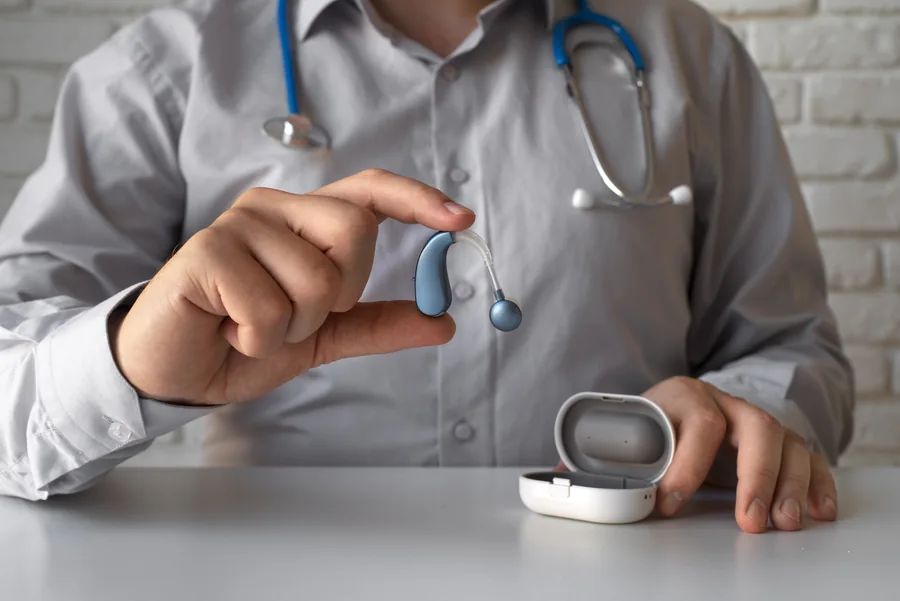
Category comparison at a glance
| Category | Intended user | How it is purchased | FDA classification |
|---|---|---|---|
| OTC hearing aids | Adults 18+ with perceived mild-to-moderate hearing loss | Direct online or retail; no prescription or exam required | FDA-regulated medical device |
| Prescription hearing aids | All ages; mild through profound hearing loss | Through a licensed hearing-care professional | FDA-regulated medical device |
| PSAPs (Personal Sound Amplification Products) | People with normal hearing amplifying specific environments | Direct retail | Consumer electronics, not medical devices for hearing loss |
What changed
Following recommendations from the 2016 National Academies report and the Over-the-Counter Hearing Aid Act of 2017, the FDA published its final rule on August 17, 2022, taking effect on October 17, 2022. The rule created a dedicated OTC medical-device category with technical safety limits on maximum sound output, distortion, insertion depth, and package labeling so adults with perceived mild-to-moderate hearing loss can buy devices without a clinic visit.
Who it is for—and who should see a clinician
The OTC category covers adults 18 and older with perceived mild-to-moderate hearing difficulty. Children under 18, people with severe or profound hearing loss, and anyone experiencing medical red flags (such as sudden hearing loss, ear pain, fluid drainage, or noticeably asymmetric hearing loss) should seek professional medical evaluation.
Regulatory guidance can be updated over time. Consult the FDA's official hearing-aid pages linked below for the current wording of device requirements and labeling rules.
Example OTC devices in the market
Within the FDA-regulated OTC category for adults with perceived mild-to-moderate hearing loss, Panda Quantum ($349) is a receiver-in-canal (RIC) model with Bluetooth for calls, TV, and music, 80 hours of total battery life with its case, and an optional self-guided hearing test in the app. Panda Air ($299) uses an earbud-style design with Bluetooth and the same optional app test, while Panda Stealth ($279) is an almost-invisible in-canal model that works out of the box with no app or Bluetooth. All three include a 45-day trial and a 5-year warranty. Product specifications are independent of the FDA rule itself.
Common questions
Who is eligible to use FDA-regulated OTC hearing aids?
OTC hearing aids are intended for adults aged 18 and older who have perceived mild-to-moderate hearing loss. Children under 18 and adults with severe or profound hearing loss require prescription hearing aids and professional evaluation.
Do you need a hearing test or prescription to buy an OTC hearing aid?
No. Under the FDA final rule effective October 17, 2022, qualifying OTC hearing aids can be purchased online or in retail stores without a prescription, medical exam, or required clinic fitting.
Read the source
- US Food and Drug Administration, OTC Hearing Aids: What You Should Know ↗
- FDA hearing-aid category overview ↗
- NASEM (2016) Hearing Health Care for Adults report (DOI: 10.17226/23446) ↗
Source links were reviewed on . Spot an error or updated document? See our corrections log.